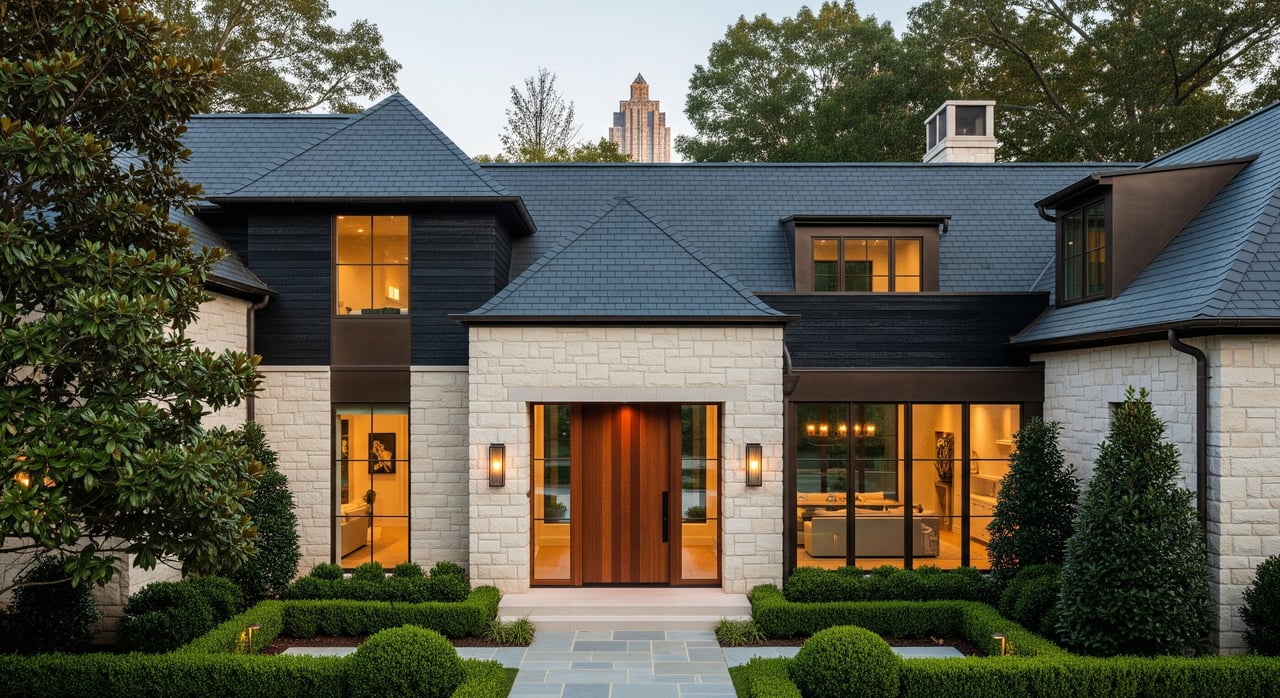
What if one accountable team handled your Buckhead home’s design and construction from start to finish? If you value time, privacy, and a polished result, the right design-build approach can simplify your journey and protect your vision. In this guide, you’ll learn what design-build really means, how it compares to traditional delivery, and what to expect with Buckhead’s permits, logistics, costs, and contracts. You’ll also see a clear path from purchase to handover so you can plan with confidence. Let’s dive in.
Design-build explained
Design-build is a delivery method where one entity handles both design and construction under a single contract with you. The designer and builder collaborate from the earliest stages with unified responsibility for scope, schedule, quality, and cost. You communicate with one team instead of managing separate architect and contractor contracts.
Single-point accountability
With design-build, you get single-point accountability. That means fewer handoffs, fewer gaps in responsibility, and less chance of finger-pointing if something needs attention. The integrated team commits to the overall result, not just one part of it, which can improve coordination and reduce surprises.
How it differs from design-bid-build
In traditional design-bid-build, you first hire an architect to complete full drawings, then solicit bids, and finally sign a separate construction contract. That process is sequential and splits responsibility between the architect and the contractor. Design-build overlaps design and construction, involves key trades earlier, and aligns the entire team behind one contract and one outcome.
Architect-led versus contractor-led
Design-build can be led by an architect or a contractor. Architect-led teams often protect design intent more strongly. Contractor-led teams can emphasize constructability and schedule. The best choice depends on your priorities, the team’s portfolio, and the contract language that defines quality standards, cost controls, and roles.
Why Buckhead owners choose design-build
Buckhead estates often involve complex scopes and high expectations. You may be planning a rebuild, a major addition, a pool and terraces, integrated security, or advanced mechanical and automation systems. A unified team helps coordinate these moving parts while respecting privacy and schedule.
Faster timelines
Design-build commonly shortens delivery because design and construction phases can overlap and long-lead items can be ordered earlier. If you are managing a move date, minimizing rental or holding costs, or simply want to reduce total project duration, this time advantage can be meaningful.
Design intent preserved
When the integrated team is committed to aesthetics and detailing, design-build can better preserve your vision. Early collaboration among the architect or designer, builder, and specialty trades helps resolve details before installation, which reduces compromises and rework.
Specialty trade coordination
Luxury work relies on niche trades, from bespoke cabinetry and stonework to integrated MEP, automation, and security. Design-build teams can bring these specialists in early for pricing and planning. That improves accuracy in budgets and schedules and helps avoid late-stage conflicts.
Ideal project types
Design-build is a strong fit for:
- Whole-house rebuilds on a tight timeline.
- Large, complex renovations where hidden conditions are likely.
- Projects that combine home, guesthouse or ADU, pool, landscape, and site infrastructure.
- Custom homes where you want a single integrated team and a streamlined process.
Buckhead permits and logistics
Buckhead sits within the City of Atlanta in Fulton County. Approvals and site logistics can shape your plan and your timeline. Early diligence with your design-build team reduces risk.
City of Atlanta approvals
Expect to address building permits and related reviews that may include grading and land disturbance, stormwater and impervious surface limits, pool permits, and separate plumbing, mechanical, and electrical approvals. Some streets have historic or overlay protections that affect façades, demolition, and trees. In select areas, Neighborhood Planning Units or community associations may request notices or outreach, so build that into your schedule.
Site constraints to plan for
Buckhead’s mature tree canopy, steep grades on certain lots, and narrow streets can impact staging, parking, and deliveries. Tree protection plans and arborist input are common. Utility easements, buffers, and lot coverage rules can dictate where additions, pools, and guest structures can go. Clear plans for traffic, noise, and stormwater control help projects move smoothly and maintain good neighbor relations.
Cost, schedule, and budgeting
High-end finishes, specialist labor, and site complexity drive costs above standard builds. Design-build can reduce owner time costs through shorter duration and improve predictability by limiting change orders, but it does not lower the base price of premium materials or craftsmanship. Plan a prudent contingency, typically 10 to 20 percent for major renovations or luxury new construction, and use transparent allowances for custom items.
Pitfalls to avoid and what to include in your contract
Even with a unified team, clarity is everything. These risk areas come up often on luxury projects and are manageable with the right checks.
Common pitfalls
- Ambiguous scopes and allowances: Vague descriptions for premium finishes or custom features lead to cost creep. Require detailed scopes and finish schedules.
- Expectations mismatch: If the design partner is not experienced with luxury details, aesthetic goals can suffer. Review portfolios and call references for comparable work.
- No independent checks: Consolidation is helpful, but you may still want an independent cost or technical peer review for structure or MEP.
- Blurry responsibility: Clarify who handles design errors, unforeseen conditions, permitting delays, and warranties. Put it in writing.
- Team imbalance: Contractor-led setups can favor speed and cost unless strong design leadership is baked in. Confirm the team mix and include design-quality standards in the agreement.
- Underestimated entitlements: Tree, grading, or overlay reviews can add time. Budget buffers for these steps.
Contract checklist
Include and verify:
- Delivery model and roles: Architect-led, contractor-led, or joint venture. List key subconsultants and specialty trades.
- Price structure: Lump sum, GMP, cost-plus with a GMP, or progressive design-to-budget. Define inclusions and exclusions.
- Change orders: Clear process, markups, and approval steps for owner changes and unforeseen conditions.
- Schedule milestones: Realistic gates, occupancy dates, and remedies for excessive delay if applicable.
- Design quality controls: Mockups, sample approvals, submittal reviews, substitution rules, and final punch-list procedures.
- Warranties and post-occupancy: Duration and scope for structure, envelope, MEP, and workmanship, plus service protocols.
- Insurance and licensing: Verify Georgia licenses for construction and design professionals. Confirm insurance limits and builder’s risk coverage.
Your path from purchase to build in Buckhead
If you prefer a streamlined, single-partner experience, an integrated brokerage-to-build path can keep strategy, design, and execution aligned. Here is a clear, practical sequence to consider.
Phase A — Pre-purchase or pre-listing feasibility
- Rapid feasibility: Review zoning, site constraints, trees, floodplain, septic or sewer, and overlays early.
- Concept and budget: Prepare high-level scope options with order-of-magnitude budgets to inform offers or listing strategy.
- Due diligence: Coordinate surveys, soils, and utility locates so you understand constraints before closing.
Phase B — Selection and contracting
- Team selection: Approve the lead design partner, general contractor or design-builder, and interior and landscape specialists. Validate references.
- Agreement structure: Execute a design-build agreement or phased preconstruction contract that defines scope, budget governance, and schedule.
- Financing alignment: Coordinate with your lender on construction draws and contingency requirements.
Phase C — Design and preconstruction
- Schematic design with cost checks: Iterate concepts with real-time pricing and early trade input.
- Entitlements plan: Map the path for permits, overlays, tree reviews, and any NPU or HOA outreach.
- Long-lead procurement: Identify windows, stone, millwork, pools, and systems that require early orders.
Phase D — Construction and communication
- Staging and logistics: Plan for narrow streets, material staging, neighbor notifications, and tree protection.
- Single point of contact: Receive consolidated updates on schedule, cost, selections, and approvals. Use clear approval gates to keep decisions timely.
- Quality control: Use mockups for critical finishes and details to protect design intent.
Phase E — Closeout and handover
- Punch list and training: Provide manuals, warranties, and training for MEP, security, and automation systems.
- Post-occupancy: Set service protocols and optional scheduled check-ins during the warranty period.
How to vet a design-build team in Buckhead
Use this quick due diligence list:
- Portfolio fit: Ask for comparable Buckhead or high-end residential projects with similar complexity.
- References: Request owner references that speak to schedule, responsiveness, and warranty support.
- Team roster: Confirm who leads design, who leads construction, and which specialty trades are engaged.
- Licenses and insurance: Verify Georgia licenses and appropriate insurance limits, including builder’s risk.
- Process clarity: Ask for sample contracts, a budget update cadence, change-order processes, and decision calendars.
- Quality standards: Look for mockups, finish schedules, and substitution rules in writing.
When traditional delivery can still make sense
There are scenarios where separate contracts can be a good fit. If you already have a preferred architect and want competitive bidding after full design development, design-bid-build may suit you. Very simple scopes with limited custom work can also work well in a traditional model, as long as responsibilities and quality standards are clearly defined.
The payoff for getting it right
Design-build in Buckhead is about clarity, speed, and coordination for complex, high-value homes. With one accountable partner, you can protect your vision, manage risk, and move faster. The key is selecting the right team and setting clear expectations in your contract so the process stays aligned with your goals.
If you are exploring a rebuild, a ground-up custom, or a layered renovation with sitework and amenities, we would be honored to help you map the path. For a discreet conversation about your Buckhead plans, connect with Komar Luxe Realty.
FAQs
What does design-build mean for a Buckhead luxury home?
- It means one entity handles both design and construction under a single contract, giving you unified responsibility for scope, cost, schedule, and quality.
How much faster is design-build compared with traditional methods?
- Timelines are often shorter because design and construction can overlap and long-lead items can be ordered earlier, though exact savings depend on scope and approvals.
Will design-build cost more or less for my project?
- It can reduce change-order risk and owner time costs, but premium finishes and specialist labor still drive base costs. Plan a 10 to 20 percent contingency.
What permits and approvals should I expect in Buckhead?
- City of Atlanta reviews typically include building, grading, stormwater, MEP trades, pool permits, and possible tree protection or historic overlay reviews.
How do I protect design quality if the contractor leads the team?
- Select a team with proven luxury portfolios, define design-quality standards in the contract, require mockups, and keep a strong design partner at the table.
What project types in Buckhead benefit most from design-build?
- Whole-house rebuilds, complex renovations with likely hidden conditions, and combined home-guesthouse-pool-landscape projects are ideal fits.
How should I vet a design-build team for estate work?
- Review comparable projects and references, verify Georgia licensing and insurance, request sample contracts, and confirm the specialty trades engaged.